
The expansion battery we only think about when the grid drops
There's a specific kind of quiet in the Đà Nẵng office when the grid goes down. The lights cut, the A/C stops, and for about ten minutes nobody says anything, because we're all waiting to see whether the router lasts.
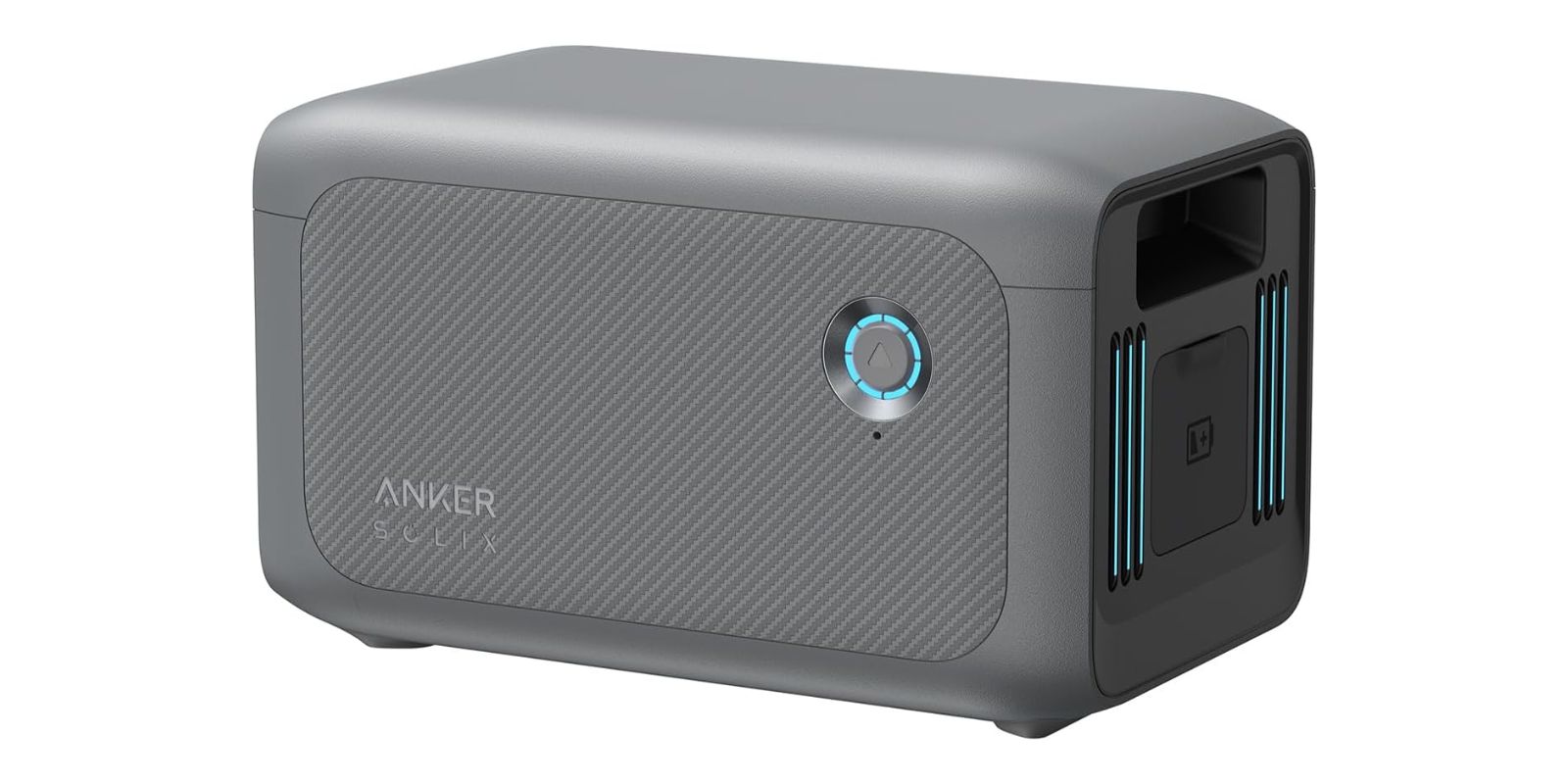
This happens more often than a London office would expect. Typhoon season, the grid takes a dip two or three times a week. The C1000 we bought last year keeps the router and a couple of laptops going for a few hours, which is usually enough. The question Mạnh put to me last month was whether a few hours was actually enough. His answer was no. Mine was "probably fine". The Anker SOLIX BP1000 expansion battery arrived the following week.
It doubles the C1000's capacity. That is the whole pitch. 2,112Wh instead of 1,056Wh. It stacks on top of the main unit and plugs in with a cable that is, I'll say upfront, uglier than the marketing photos suggest.
Who Actually Needs This
Not everyone. This is a very narrow product. It works only with the original Anker SOLIX C1000. If you already own one and you've hit the capacity limit in real use, it's the right move. If you don't, go read the last section of this post before buying anything.
- 🔋 You already own the C1000, original model, not Gen 2 (which this does not support)
- 🌀 You get power cuts that last longer than four hours in a stretch
- 🏠 You want to keep modest loads alive (router, laptops, a fridge), not run heavy appliances
- 📦 You can accept that it stacks on top and adds a heavy, visible connecting cable
- 🚐 You travel for off-grid work (a shoot, a weekend cabin, an Airbnb with flaky power)
What It Gets You
Capacity, in plain English
1,056Wh on top of the C1000's 1,056Wh. That's 2,112Wh combined. One reviewer ran a 1,300-watt portable A/C on the pair without issue, which gives you a sense of the ceiling. For our actual use (the router, two laptops, a small desk fan through most of a typhoon-season outage) the combined capacity is not the bottleneck. The bottleneck is the rated output of the C1000 itself, not the stored energy.
LiFePO4 chemistry, 10-year lifespan
Same battery chemistry the newer power stations have moved to. Longer cycle life than the older NMC packs, safer thermally, and the reason Anker quotes a ten-year lifespan (3,000 cycles). If you're cycling it daily, that is a real number. If you're using it twice a month, you'll probably replace the setup before the chemistry gives up.
Charging
Full charge in under two hours if you enable UltraFast mode in the Anker app. Slower on a normal AC cycle. Important caveat: the BP1000 cannot be charged on its own. It has to be plugged into a C1000 to take power. This is obvious once you understand what "expansion battery" means and frustrating for anyone who missed that detail before buying.
Form factor
Stacks directly on top of the C1000 with the same footprint. Around nine kilos for the BP1000 alone. Carrying the stacked pair is a two-hand operation. Ours lives permanently on the floor under Mạnh's desk, which is fine, but calling it "portable" is a stretch if you're not young.
💡 Tien's Note
If you live somewhere with unstable power, buy the BP1000 and the C1000 at the same time if you can. The connector cable is long enough to stack them cleanly, but short enough that sourcing a spare from a different seller is a pain. And do not, repeat do not, buy this one if you own the C1000 Gen 2. It will not work.
The Honest Version
4.5 stars across 216 reviews. 84% of those are five-star and say roughly what you'd expect: doubles capacity, stacks cleanly, handles the loads it's rated for. The 9% one-star reviews are where the useful information sits.
Two things to know before buying.
First, the drain order. When the BP1000 is attached, the expansion drains completely before the main C1000 kicks in. If you were imagining the two batteries working as a single pool, they don't. You drain the add-on to zero, then start pulling from the C1000. A few reviewers argue that repeatedly cycling the expansion to zero is worse for it over time, and they aren't wrong. This is the single most common complaint, and Anker has not changed the behavior.
Second, the two-C1000s argument. Several reviewers (the loudest with thirteen helpful votes) point out that if you're going to spend this much on an expansion, you might as well buy a second C1000 and have two independent power stations. For a single-room backup, the expansion is still the right call because of the stacked footprint. For a household where one unit lives in the kitchen and another in a bedroom, two C1000s win. We keep the stacked pair in one room because the Đà Nẵng office is one open space. If you don't have that setup, think again.
Outside North America, the warranty story has rough edges. One UK reviewer had a unit that refused to accept charge and spent weeks cycling through firmware support with Anker before it was resolved. The product is relatively new in the Anker lineup and the outside-US support experience is not as clean as the US one.
Closing
Ours earns its keep about three times a month, which is enough. When the grid drops in Đà Nẵng and the router stays up, nobody notices, and that is exactly the outcome we paid for. The test for this category isn't whether a product works on a calm Sunday, it's whether a year from now, on the third outage of the week, you're still glad you bought it. For C1000 owners in the right scenario, this one clears that bar.
As Amazon Associates we earn from qualifying purchases. This comes at no extra cost to you.